Engines - Vibration (PW4060)
- QRH - ENGINE FIRE or SEVERE DAMAGE or SEPARATION
- Boeing - Flight Crew Considerations for Engine In-Flight Shutdown
Transient High Vibration Indication
Boeing The engine vibration monitoring system is designed to provide the flight crew with information on the state of balance of the engine during steady running conditions. Because of this, indicated vibration may increase when engine thrust is changed, such as during a thrust reduction for descent. The increase occurs when the N2 rotor has no thrust load during engine deceleration.
As a result, a transient increase in broadband vibration, accompanied by a correspondingly high N2 track vibration, is not considered unusual during engine deceleration.
Airborne Vibration Monitoring System
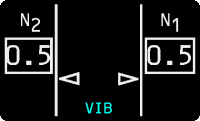 The Airborne Vibration Monitoring System monitors engine vibration levels. The vibration indications are displayed on the secondary engine display. The vibration source indication (the rotor with the highest vibration level) is also displayed. If the vibration monitoring system cannot determine the source (N1 or N2), broadband (BB) is displayed for the affected engine. Broadband vibration is the average vibration detected.
The Airborne Vibration Monitoring System is primarily intended for engine condition monitoring, but it is also a useful tool for isolating and determining corrective action for engine anomalies.
Each engine has a primary and backup accelerometer connected through a signal conditioner tracking filter, to the vibration display on the secondary engine display. The accelerometer signal is filtered into separate frequencies, which represent engine Broadband and tracked vibration for the individual rotors.
The Airborne Vibration Monitoring System is a trend type, primarily intended for engine condition monitoring, but it is also a useful tool for isolating and determining corrective action for engine anomalies; each engine has its own vibration characteristics and normal values at different thrust settings.
Certain engine malfunctions can result in airframe vibrations from a windmilling engine. As the airplane transitions from cruise to landing, there can be multiple, narrow regions of altitudes and airspeeds where the vibration level can become severe. In general, airframe vibrations can best be reduced by descending and reducing airspeed. However, if after descending and reducing airspeed the existing vibration level is unacceptable, and if it is impractical to further reduce airspeed, the vibration level may be reduced to a previous, lower level by a slight increase in airspeed.
System Failure
If the filter fails, engine vibration is displayed and identified as broad band (BB).