Engines - Thrust Reverse (PW4060)
- Limitations - Reverse Thrust
Each engine has a pneumatically actuated fan air thrust reverser. Reverse thrust is available on the Ground only.
Each thrust reverser is powered by its respective engine and is automatically protected against unintentional reverse thrust by an autostow feature in the thrust reverser system.
If an uncommanded thrust reverser unlock is sensed, pneumatic power is automatically applied to stow the reverser.
Reverse Thrust Levers
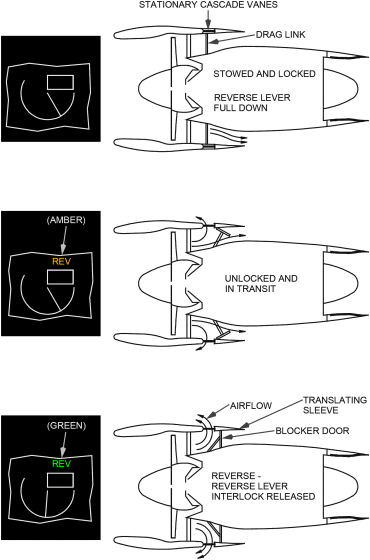
The Reverse Thrust Levers can be raised only when the Forward Thrust Levers are in the idle position. An interlock stop limits thrust to idle reverse while the reverser is in transit. The interlock system also restricts the Forward Thrust Levers from moving forward, until the Reverse Thrust Levers are fully down and the Reverser is no longer in transit.
The EECs control thrust limits during reverser operation.
When the reverse thrust levers are pulled aft to the interlock position:
- The Autothrottle disengages.
- The Auto Speedbrakes deploy.
When the reverser system is activated:
Reverser isolation valve opens allowing the reverser translating sleeves to pneumatically unlock and move aft.
The fan flow blocker doors rotate into place to direct fan air through the stationary cascade guide vanes.
The reverser indication REV is displayed above each digital EPR indication. REV is displayed in amber whilst the reverser is in transit.
When the interlock releases:
The reverse thrust levers can be raised to the maximum reverse thrust position.
The REV indication changes to green when the reverser is fully deployed. All forward thrust reference displays are inhibited.
When reverse thrust is no longer required, moving the reverse thrust levers forward and down to the Reverse Idle Detent schedules fuel flow for minimum idle operation.
Pushing the Reverse Thrust Levers to the full down position retracts the reversers to the stowed and locked position. While the reverser is in transit, the REV indication changes color to amber. The thrust levers cannot be moved forward until the reverse thrust levers are fully down. When the reverser reaches the stowed position, the REV annunciation disappears.
REV ISLN
(SB minimizes deployment of thrust reversers inflight and removes thrust reverser isolation light. The SB introduces an electro-mechanical lock which is only released when the aircraft is on the ground and removes the discrete REV ISLN light.)
SB not embodied
The REV ISLN light illuminates and the L/R REV ISLN VAL advisory message is displayed when a fault exists in the reverser system. If the REV ISLN light appears in flight, additional system failures may cause inflight deployment. The affected reverser should deploy normally after landing but may not stow when commanded.SB embodied
On the ground, the L/R REV ISLN VAL EICAS advisory message is displayed when a fault exits in the reverser system. If this fault is detected above 80 kt during takeoff, or in flight, the message is inhibited until after landing. An electro-mechanical lock prevents uncommanded reverser deployment in the event of additional system failures.