Engines - Fuel System (PW4060) 
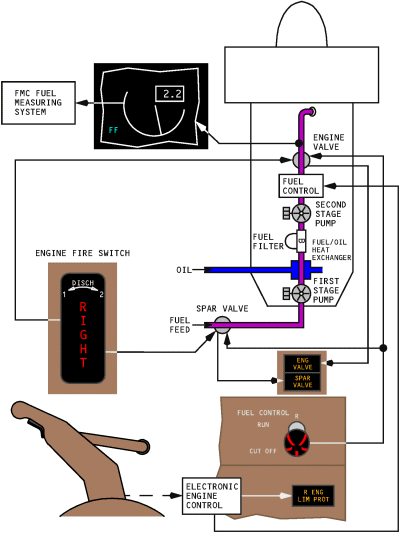
Fuel is supplied under pressure by fuel pumps located in the fuel tanks. The fuel flows through a spar valve, located in the main tank. The fuel is then managed as follows:
- It then passes through the first stage (low-pressure) engine fuel pump where additional pressure is added.
- The fuel is then heated automatically by engine oil as it flows through the fuel/oil heat exchanger.
- A fuel filter then removes contaminants.
- Final pressure is generated by a second stage (high-pressure) fuel pump.
- The fuel is then controlled by the Fuel Metering Unit to meet existing thrust requirements.
- The fuel then flows through the Engine Fuel Valve and Fuel Flow Meter before entering the engine combustion chamber.
Fuel Control Unit
The engine fuel control system incorporates a fuel metering unit which operates in conjunction with the EEC. The fuel control system schedules fuel flow to meet engine thrust requirements as dictated by the thrust lever position and the specific engine operating conditions. The EEC controls the metered fuel and prevents engine limits from being exceeded.
Engine and Spar Valves
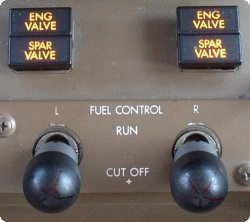
The Spar Valve located in the main fuel tank and the Engine Valve located in the Fuel Control Unit allow fuel to flow to the engine when the both valves are open. The valves open when the Engine Fire Switch is IN and the FUEL CONTROL Switch is in the RUN position. Both valves close when either the Fuel Control Switch is at CUTOFF or the Engine Fire Switch is OUT.
The ENG VALVE and SPAR VALVE lights will illuminate momentarily as the valves open or close. If the valves do not agree with the Fuel Control Switch or the respective Fire Switch position after allowing for normal operating time, the lights remain illuminated and the EICAS advisory message L/R FUEL SPAR VAL(VE) or L/R ENG FUEL VAL(VE) displays.
Fuel Filters
The fuel is filtered by a filter with bypass capabilities. If the filter becomes clogged with contaminates, fuel will bypass the filter allowing contaminated fuel to enter the fuel control unit.
The EICAS advisory message L/R ENG FUEL FILT displays to indicate the affected engine filter is clogged and is approaching a level sufficient to cause filter bypass.
Erratic engine operation and flameout may occur due to fuel contamination.
Fuel Flow Measurement
Fuel flow is measured after passing through the Engine Fuel Valve. Fuel flow is displayed on the secondary engine display. Fuel flow information is also provided to the FMS for Fuel Used and Fuel Remaining calculations. PROGRESS PAGE 2